Our answer
West Lake 杭州
Two days for the lake and Lingyin; add a morning in the tea hills
The short answer
Hangzhou is West Lake: walk or cycle the causeways, see the Ten Scenes, then climb Leifeng Pagoda for the view. Lingyin Temple and Feilai Feng have been free since December 2025, by reservation. Spend a morning in the Longjing tea villages. Eat dongpo pork, Longjing shrimp and pian er chuan noodles. Stay near the east shore of the lake.
| Must see | West Lake and the Ten Scenes; Lingyin Temple; Leifeng Pagoda |
|---|---|
| Free | West Lake, and Lingyin with Feilai Feng since 1 December 2025 |
| Reserve | Lingyin: time slots, up to 35,000 on weekdays; passport is accepted |
| Stay | Hubin, on the east shore, for walking to the lake |
| From Shanghai | About an hour by high-speed train to Hangzhou East |
What to see
The lake itself is free.[1][2][4][5][6][7][20][21]
| Place | Chinese | Why go | Ticket and hours |
|---|---|---|---|
| West Lake and the Ten Scenes | 西湖 · Xīhú | The lake the city is built around: causeways, the Broken Bridge, Three Pools Mirroring the Moon, and the hills on the far side | Free. Walk or rent a public bike; sightseeing carts and boats when you tire |
| Lingyin Temple and Feilai Feng | 灵隐寺 · Língyǐn Sì / 飞来峰 · Fēiláifēng | One of China’s most renowned ancient temples, with more than 340 life-size stone statues at Feilai Feng opposite | Free since 1 December 2025, by real-name time-slot reservation; open 7:30–17:30 |
| Leifeng Pagoda | 雷峰塔 · Léifēng Tǎ | The rebuilt pagoda on the south shore, above the original Song foundations under glass; the view back over the lake is the point | Check prices and opening hours before you go. |
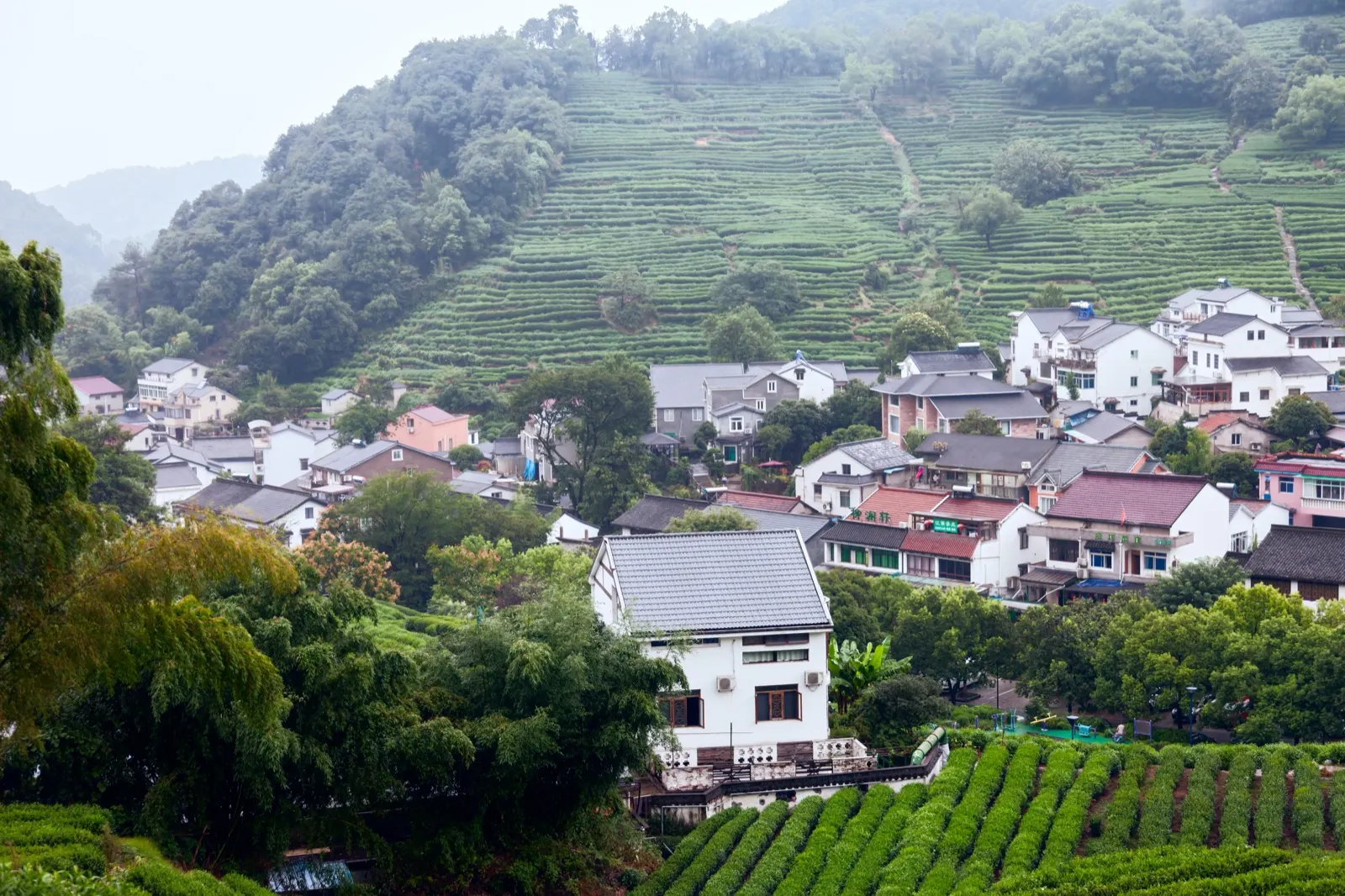
| Longjing tea villages | 龙井村 · Lóngjǐng Cūn / 梅家坞 · Méijiāwù | The tea villages around West Lake, where West Lake Longjing tea is grown; farm meals and tastings in the villages | Free to walk |
| Hefang Street and the Imperial Street | 河坊街 · Héfāng Jiē / 御街 · Yù Jiē | The old commercial street at the foot of Wushan Hill, with century-old shops such as the Huqingyu pharmacy and Wanlong ham shop; the Southern Song Imperial Street is a separate street, 4,185 m long, built to recreate the road the emperors used | Free to walk |
| Grand Canal at Gongchen Bridge | 拱宸桥 · Gǒngchén Qiáo | The bridge built in 1631 at the southern end of the Grand Canal, the longest and tallest ancient bridge in the city, with the 2,880 m Qiaoxi pedestrian street and its canal museums behind it | Free to walk; museum hours vary |
Prices and hours change; check the scenic area’s notices before you go.
What to eat
Hangzhou cooking is light-flavoured and can be both salty and sweet.[8][9][10]
| Dish | Chinese | What it is | Notes |
|---|---|---|---|
| Dongpo pork | 东坡肉 · Dōngpō ròu | Dongpo pork | One of the city’s four best-known dishes |
| Longjing shrimp | 龙井虾仁 · Lóngjǐng xiārén | Shelled shrimp stir-fried with Longjing tea leaves | Also one of the four |
| Beggar’s chicken | 叫化鸡 · jiàohuà jī | Chicken wrapped in lotus leaf and mud, then roasted. Hangzhou’s version is Weiji, recognised as one of Hangzhou’s 36 famous dishes, acknowledged by Zhejiang Province in 1956 | Order it for a table, not for one |
| Pian er chuan noodles | 片儿川 · piàn’érchuān | Noodles with pickled cabbage, bamboo shoots and slices of lean meat; the everyday bowl of the city | Over a hundred years old and still the local favourite |
Most restaurants take Alipay or WeChat Pay, and foreign cards work in the city’s key shopping streets, 4A-and-above scenic areas, hotels and hospitals.
Where to stay
| If you want… | Stay in | Why |
|---|---|---|
| To walk to the lake | Hubin, on the east shore | Hubin is one of the city’s main shopping streets; it is also one of the first payment-service zones set up for foreign visitors |
| The new city and the river | Qianjiang New Town | The CBD on the Qiantang River, with the light show on the Qiantang River banks at 18:30 and 19:30 on Fridays and Saturdays and 19:30 from Sunday to Thursday until 14 April 2027; the times change with the seasons, so check before you go |
| An early train | Hangzhou East | On Metro Lines 1, 4, 6 and 19; Shanghai Hongqiao is about an hour away, with more than 160 trains a day between the two cities |
Hangzhou East is convenient; for a short visit, stay by the water.
Getting around
The metro is the fast way across the city and to the stations; the lake is the slow part, and that is the point. Plan routes in English with our Hangzhou metro map and route finder. Fares are by distance, starting at ¥2 for the first 4 km, then ¥1 for every 4 km up to 12 km, every 6 km up to 24 km and every 8 km beyond.
We found no official notice that foreign Visa or Mastercard cards can be tapped at Hangzhou’s metro gates. What is documented is the ticket machine: it takes cash, a UnionPay card, Alipay, WeChat Pay, the UnionPay app and digital RMB, and the service desk at every station sells single tickets and one- and three-day travel passes. So as a visitor, buy a ticket or tap a card where the gates take one.
Xiaoshan Airport is on Metro Lines 1, 7 and 19. The metro does not run all night, so check the current timetable before you travel: the last train to Xianghu on Line 1 leaves at 22:30, the last train to Wushan Square on Line 7 at 22:49 and the last Line 19 train toward Hangzhou West Railway Station at 23:14. Hangzhou East is on Lines 1, 4, 6 and 19. From Shanghai, high-speed trains reach Hangzhou East in about an hour, with more than 160 a day on the Shanghai–Hangzhou line.[15][16][17][18][19][22][24]
What locals actually do

Hangzhou people walk the lake, in every season and every weather: the residents’ card is effectively the causeway, and the classic route is the Su Causeway in spring, the lotuses at Quyuan in summer, the moon over the Calm Lake in autumn and the Broken Bridge in snow. The bureau’s own advice is to walk or rent a bike, with the battery carts and boats for when you run out of legs.
The other habit is tea. The recommended route out of the city runs from Meijiawu tea village over Shili-Langdang Ridge and Shifeng Hill to Longjing village and the China National Tea Museum: you hike through the tea gardens, eat farm food and taste West Lake Longjing where it is grown. In the West Lake Scenic Area, Qingteng Tea House, one of the two tea houses the tourism bureau names, is for the view over the water.[4][5][11]
Questions readers ask
Is West Lake free?
Yes. West Lake has no entrance fee and is open all day, the first 5A scenic area in China to do so.
Do I need to book Lingyin Temple?
Yes, but it is free. Since 1 December 2025 the Feilai Peak area including Lingyin is free and entry is by real-name time-slot reservation through the official mini-programme. Foreign visitors can book with a passport.
How much is Leifeng Pagoda?
Check prices and opening hours before you go.
How long does it take to get from Shanghai to Hangzhou?
About an hour by high-speed train from Shanghai Hongqiao to Hangzhou East, with more than 160 trains a day between the two cities.
What should I eat in Hangzhou?
Dongpo pork, Longjing shrimp, beggar’s chicken and a bowl of pian er chuan noodles. The first two are among the city’s four signature dishes.
Sources
- Lingyin Temple (official English site), free admission and reservation notice from 1 December 2025 (21 November 2025) · accessed 15 Nov 2026
- Xinhua, Lingyin Feilai Peak scenic area offers free admission (1 December 2025) · accessed 15 Nov 2026
- China Daily, West Lake and Lingyin drop entrance fees (21 November 2025) · accessed 15 Nov 2026
- Hangzhou Municipal Culture, Radio, TV and Tourism Bureau, West Lake scenic area and the Ten Scenes · accessed 15 Nov 2026
- eHangzhou (Hangzhou government English portal), West Lake: free for entrance · accessed 15 Nov 2026
- Hangzhou Municipal Culture, Radio, TV and Tourism Bureau, Leifeng Pagoda (9 May 2024) · accessed 15 Nov 2026
- Hangzhou Municipal Culture, Radio, TV and Tourism Bureau, the Longjing tea village route (9 August 2023) · accessed 15 Nov 2026
- eHangzhou, the four most famous dishes in Hangzhou · accessed 15 Nov 2026
- Hangzhou Municipal Culture, Radio, TV and Tourism Bureau, Beggar’s Chicken (28 June 2023) · accessed 15 Nov 2026
- Hangzhou Municipal Culture, Radio, TV and Tourism Bureau, Hangzhou’s most favoured dishes: pian er chuan (3 March 2017) · accessed 15 Nov 2026
- Hangzhou.com.cn (Chao News), payment services for foreign visitors in the Hubin district (25 April 2024, in Chinese) · accessed 15 Nov 2026
- eHangzhou, Qianjiang New City, the Hangzhou CBD (31 October 2023) · accessed 15 Nov 2026
- Hangzhou Municipal Government, Hangzhou’s autumn-winter lighting schedule: the Qiantang River banks light show and the musical fountains (12 October 2026, in Chinese) · accessed 15 Nov 2026
- Hangzhou Municipal Culture, Radio, TV and Tourism Bureau, Hangzhou metro lines and stations (24 August 2023) · accessed 15 Nov 2026
- Xiaoshan International Airport (official English site), metro lines at the airport and the last trains (page carries no publication date) · accessed 15 Nov 2026
- Hangzhou News (Hangzhou.com.cn), metro ticket machines add Alipay, WeChat and UnionPay scan-to-pay, and the station service desks sell single tickets and one- and three-day passes (28 July 2023, in Chinese) · accessed 15 Nov 2026
- eHangzhou, Shanghai–Hangzhou high-speed rail, 160 trains a day (2 November 2020) · accessed 15 Nov 2026
- eHangzhou, Hangzhou railway stations and timetables (11 April 2024) · accessed 15 Nov 2026
- Hangzhou Municipal Government, foreign-card acceptance across the city’s key areas (9 September 2024, in Chinese) · accessed 15 Nov 2026
- eHangzhou, Hefang Street and the Southern Song Imperial Street (updated 9 April 2020) · accessed 15 Nov 2026
- eHangzhou, Hangzhou’s Qiaoxi block and Gongchen Bridge (updated 6 July 2023) · accessed 15 Nov 2026
- Hangzhou News (Hangzhou.com.cn), how Hangzhou metro fares are calculated by distance (10 October 2025, in Chinese) · accessed 15 Nov 2026
- Hangzhou Government English portal, Qianjiang New City autumn light show and its seasonal viewing times (28 September 2025) · accessed 15 Nov 2026
- Hangzhou CPPCC news site, Dushi Kuaibao: getting into the city after a late arrival at Hangzhou airport, and the last metro trains (8 April 2025, in Chinese) · accessed 16 Nov 2026
Update log. 16 November 2026 — reviewed. Next review due 15 February 2027. Suggest a correction