Our answer
20 Feb 2027 元宵节
The 15th day of the first lunar month; not a public holiday
The short answer
The Lantern Festival (元宵节, Yuánxiāojié) falls on the 15th day of the first lunar month, Saturday 20 February 2027, and ends the Chinese New Year season. Families light lanterns, guess riddles and eat tangyuan or yuanxiao. It is not a public holiday, but cities such as Zigong, Nanjing and Shanghai stage huge lantern shows.
| Chinese name | 元宵节 (Yuánxiāojié), also 上元节 (Shàngyuán jié) |
|---|---|
| Date 2027 | Saturday 20 February, the 15th day of the first lunar month |
| Next dates | 9 February 2028; 27 February 2029 |
| Food | Tangyuan (south, wrapped) or yuanxiao (north, rolled) |
| Public holiday? | No. The 2027 break runs 5–13 February for Chinese New Year only |
How we know
3 signals · SourcedLunar calendar
The Hong Kong Observatory conversion table puts the first lunar month of 2027 from 6 February, so its 15th day is 20 February 2027 [1]
STRONGAttendance
The 31st Zigong International Dinosaur Lantern Festival drew over 2.08 million visits in 2025, a record for the event [6]
STRONGHoliday status
The State Council’s 2027 schedule lists holidays for New Year, Spring Festival, Qingming, Labour Day, Dragon Boat, Mid-Autumn and National Day only; the Lantern Festival gets no day off [2]
STRONGWhat the Lantern Festival is
The Lantern Festival falls on the 15th day of the first month of the Chinese lunar calendar, the night of the year’s first full moon. It closes the Chinese New Year season, two weeks after New Year’s Day itself. Yuanxiao, one of its Chinese names, means exactly that: the first full-moon night of the year.
By tradition the festival was already noticed in the Western Han dynasty (206 BC–AD 25), and lantern fairs on the night became grand affairs from the Sui and Tang dynasties onwards, with the lanterns burning bright enough that old accounts say the night looked like daytime. Crowds went out to admire lanterns of every shape and to solve riddles pinned to them, much as they do now.
For travellers, the practical point is simple: the big lantern shows usually open with Chinese New Year and run for weeks past the festival night itself, so you do not have to hit the exact date to see the lights.[4]
When is the Lantern Festival?
The festival always lands on the 15th day of the first lunar month, so the Western date moves each year. Conversions follow the Hong Kong Observatory’s Gregorian–lunar tables.[1][14][15]
| Year | Date | Day | Chinese New Year that year |
|---|---|---|---|
| 2027 | 20 February | Saturday | 6 February (Year of the Goat) |
| 2028 | 9 February | Wednesday | 26 January (Year of the Monkey) |
| 2029 | 27 February | Tuesday | 13 February (Year of the Rooster) |
Chinese New Year 2027 runs 6–20 February in festival terms, with the Lantern Festival as the closing night.
What people do: lanterns, riddles and rice balls


Lantern viewing is the centre of the night. Cities hang red lanterns in streets and parks, and the major fairs build whole themed installations. On the night itself families go out after dinner, children carry small lanterns, and the fairs stay lit for hours.
Lantern riddles (猜灯谜, cāi dēngmí) are the classic parlour game of the festival. Riddles are written on slips and hung on the lanterns; anyone who solves one traditionally claims a small prize. The habit is old enough that it is described in accounts of the lantern fairs held since Sui and Tang times.
Then there is the food. In the north, yuanxiao are made by rolling the filling in dry glutinous rice flour, like building a snowball; in the south, tangyuan are made by wrapping rice dough around the filling, more like making dumplings. Yuanxiao are usually sweet with a chewier bite; tangyuan come soft and silky, in sweet and savoury versions, from the lard-and-sesame tangyuan of Ningbo to pork and shepherd’s-purse fillings in Yangzhou. Either way, the round balls stand for family reunion, which is the point of eating them together. The tradition goes back to the Song dynasty (960–1279), when the balls were called ‘floating round balls’, and the north–south split of methods was fixed by the Ming and Qing.
The night also brings performances. Dragon dances and lion dances are the standard festival street programme, and local regions add their own: fish-shaped lantern parades in Ningbo, shehuo folk performances with lion dances in Gansu, dragon-dance processions in Hunan and Zhejiang. Our guide to the Chinese dragon explains what the creature stands for.[4][5][13]
Where the festival came from
No single origin story covers it; the traditions overlap, and it is worth knowing them as traditions rather than as one settled history.
One thread is imperial and early: festival activity on the 15th day of the first month is traced back to the Western Han dynasty (206 BC–AD 25). A Buddhist thread follows: the Chronicle of the Eastern Han tells that Emperor Ming, to honour the Buddha, ordered lamps lit in the palace and the temples on that night, and the custom of lighting lanterns grew from that decree.
A Taoist thread gives the festival its other name. Taoism worships the Three Primes (三元, sānyuán), and the Lantern Festival is the birthday of the first of them, so it is also called the Shangyuan Festival (上元节).
Whichever thread you follow, the public form the festival still takes, the great night-time lantern fairs with riddles and crowds, was set by the Sui (581–618) and Tang (618–907) dynasties, and the rice balls joined the menu in the Song.[4]
Where to see the biggest lantern shows in China
Three shows tower over the rest, and each is on China’s national intangible cultural heritage list. Dates below are the most recent official ones; check each fair’s own channels before you go, because the zones and entry rules change every year.[3][6][7][8][9][10][11]
| City | Show | Known for | Recent dates and notes |
|---|---|---|---|
| Zigong, Sichuan | Zigong International Dinosaur Lantern Show (自贡国际恐龙灯会) | Giant themed lantern sets, dinosaurs and all; national intangible cultural heritage since 2008; lantern-making records in the city go back to Tang and Song times | 2025: 31st edition, 17 January to end of March; over 425,000 square metres of displays, more than 200 lantern sets; over 2.08 million visits, a record |
| Nanjing, Jiangsu | Qinhuai Lantern Fair (秦淮灯会) | Lanterns along the Qinhuai River around the Confucius Temple, billed as ‘the world’s number one lantern festival’; on the first national intangible cultural heritage list, 2006 | 2025: 39th fair, lit 21 January, main displays 29 January to 15 February, extended to 31 March; five zones and 352 lantern sets; free entry by reservation |
| Shanghai | Yuyuan Garden Lantern Festival (豫园灯会) | Lanterns among Ming-style architecture at the City God Temple quarter; an official event since 1995, national intangible cultural heritage since 2011 | 2026: 26 January to 3 March, six lantern zones, the folk-art lantern zone ticketed at 80 yuan for adults and 50 yuan for children; closed on Chinese New Year’s Eve |
Ticket prices and entry times are from 2026 official notices and can change: check the fair’s own ticketing channel before you go. On the booking platform Qunar these three were the most popular lantern shows of 2025.
The festival in numbers
The lantern shows are now big business. The 31st Zigong International Dinosaur Lantern Festival counted over 2.08 million visits in 2025, a record for the event, after drawing nearly 1.15 million visitors by 12 February that year alone. Its host city has turned lantern-making into an industry worth more than 8 billion yuan a year across the whole chain, with Zigong firms said to hold about 85 percent of China’s lantern market and 92 percent of the global one.
The festival night itself moves serious money. In 2025, bookings for lantern-show scenic spots on the travel platform Qunar grew nearly 20 percent year on year, with Zigong, Yuyuan in Shanghai and the Qinhuai fair in Nanjing the most popular. On Douyin, group-buying orders for family reunion products and yuanxiao grew 193 percent between 29 January and 10 February 2025, and on Meituan Travel, searches for drone light shows rose 318 percent year on year between 3 and 9 February.
The rice balls have their own season too. Beijing’s Daoxiangcun pastry shops make yuanxiao by hand in the days before the festival, and in 2026 the brand sold four flavours: black sesame, five-nut, osmanthus-hawthorn and chocolate.[3][5][6][11]
Chinese lanterns: what they are and what they mean
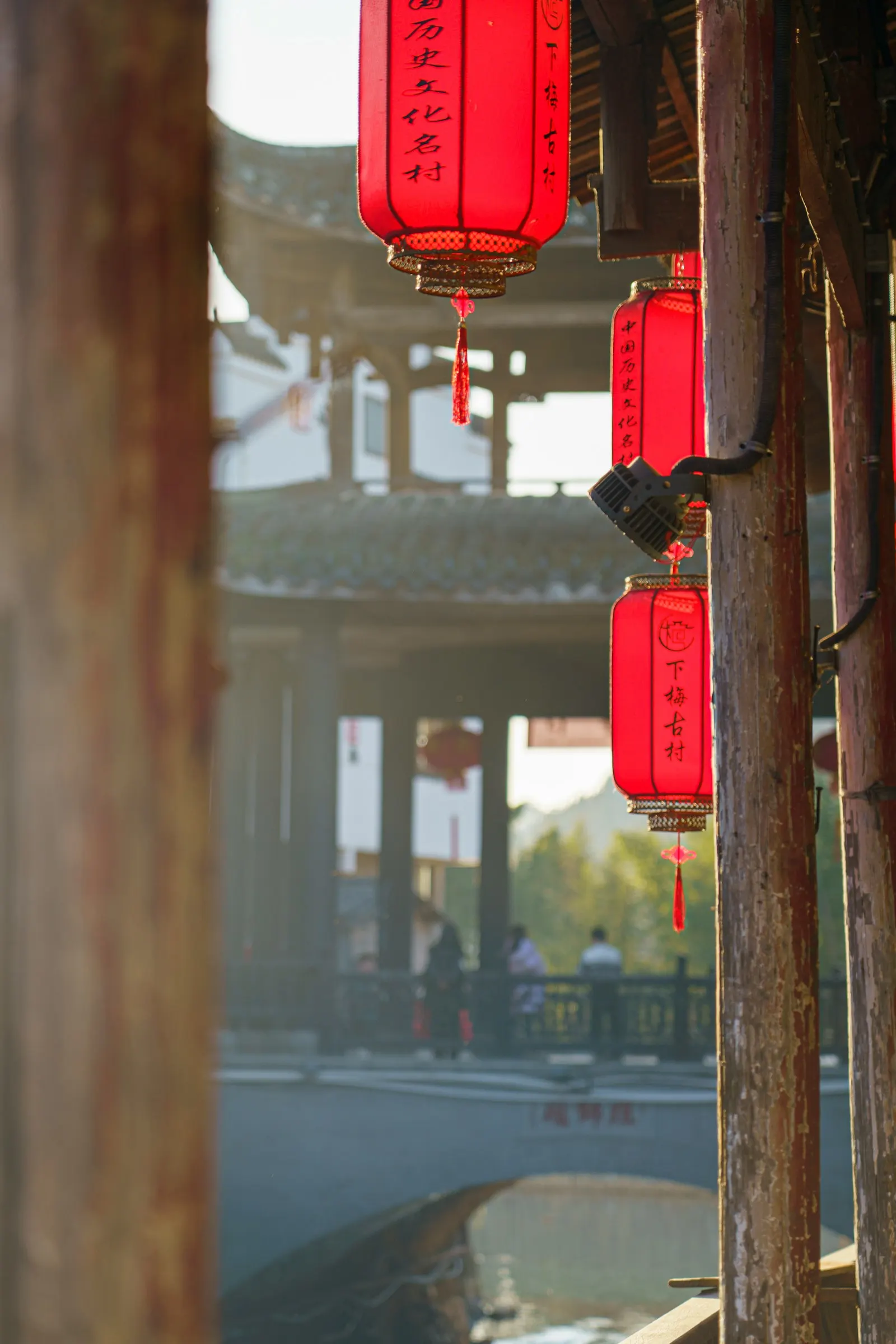
Chinese lanterns (灯笼, dēnglong) began as practical lamps but have been festive objects since at least the Western Han dynasty, when ordinary people are recorded enjoying festival celebrations lit by them. Their popularity peaked in the Tang dynasty, when the Lantern Festival became an annual milestone, and lantern markets multiplied in the Ming and Qing, each region developing its own styles.
The red lantern is the festival’s shorthand. Hung in strings along streets, shops and homes, red lanterns stand for festivity and good fortune, and they are the image most people picture when they think of Chinese New Year.
The palace lantern (宫灯, gōngdēng) is the craft’s showpiece: a wooden frame, mortise-and-tenon joined with no nails, with painted silk panels, dragon-head pillars and tassels, built in over a hundred steps. It began as decoration for the imperial court, spread to officials as Qing-era rewards and then to ordinary households; the craft was listed as national intangible cultural heritage in 2008. Regional styles differ: northern lanterns such as Beijing’s are grander and more solemn, southern ones more delicate and intricately carved, and Hebei’s Shengfang lanterns, also heritage-listed since 2008, take their motifs from water-town life.
The craft now travels. Zigong’s lanterns went abroad for the first time in 1990, to Singapore, have since lit over 90 countries and regions, and in 2024 alone 104 Zigong lantern exhibition projects ran in 67 cities across 23 countries.[3][12]
Questions readers ask
When is the Lantern Festival 2027?
Saturday 20 February 2027, the 15th day of the first lunar month. The next ones fall on 9 February 2028 and 27 February 2029.
What is the Lantern Festival?
China’s festival of the first full moon of the lunar year, on the 15th day of the first lunar month. It ends the Chinese New Year season with lantern fairs, riddles and glutinous rice balls.
Why is it called the Lantern Festival?
Because lighting lanterns is its defining custom. Tradition traces it to an Eastern Han emperor’s order to light the palace and temples in honour of the Buddha, and grand lantern fairs have been held since the Sui and Tang dynasties.
What do people eat at the Lantern Festival?
Glutinous rice balls: yuanxiao in the north and tangyuan in the south. Both symbolise family reunion, and the tradition dates to the Song dynasty.
What is the difference between tangyuan and yuanxiao?
The making, not the idea. Northern yuanxiao are made by rolling the filling in dry glutinous rice flour; southern tangyuan are made by wrapping dough around the filling. Yuanxiao are chewier and usually sweet; tangyuan are softer, sweet or savoury.
What do Chinese lanterns symbolise?
Festivity, good fortune and reunion. Red is the festival colour, and lanterns hung in strings mark celebrations. The palace lantern began as imperial decoration and is now a heritage craft.
Is the Lantern Festival a public holiday in China?
No. The State Council’s 2027 schedule gives a 9-day Spring Festival break (5–13 February) but no day off for the Lantern Festival on 20 February. The lantern shows run for weeks regardless.
Where is the best lantern festival in China?
The three most popular on the booking platform Qunar in 2025 were Zigong’s International Dinosaur Lantern Show in Sichuan, the Qinhuai Lantern Fair in Nanjing and the Yuyuan Garden Lantern Festival in Shanghai. All three are national intangible cultural heritage.
Sources
- Hong Kong Observatory, Gregorian-Lunar calendar conversion table 2027 · accessed 10 Nov 2026
- Xinhua, State Council General Office notice on the 2027 public holiday schedule (5 November 2026, in Chinese) · accessed 10 Nov 2026
- Xinhua, China’s ‘city of lanterns’ shares light, joy worldwide (14 February 2025) · accessed 10 Nov 2026
- China International Communications Group, China Keywords: Yuanxiao Festival (Lantern Festival), 28 August 2024 · accessed 10 Nov 2026
- China Daily, It’s lantern festival — time to have a ball (3 March 2026) · accessed 10 Nov 2026
- Xinhua, Traditional lantern lights up China’s night economy (18 May 2026) · accessed 10 Nov 2026
- Nanjing Municipal Government, 39th Qinhuai Lantern Fair lighting ceremony and fair details (21 January 2025, in Chinese) · accessed 10 Nov 2026
- Travel China (official tourism website of the People’s Republic of China), The Qinhuai Lantern Festival (28 November 2025) · accessed 10 Nov 2026
- Shanghai Municipal Government, Yuyuan light show: 30 years aglow (12 December 2025) · accessed 10 Nov 2026
- Shanghai Municipal Government, Get your tickets: Yuyuan Lantern Festival opens on Jan 26 (16 January 2026) · accessed 10 Nov 2026
- People’s Daily Online (Global Times report), China’s traditional Lantern Festival extends holiday spending spree (13 February 2025) · accessed 10 Nov 2026
- China Daily via Shanghai Municipal Government, Illuminating tradition: the lantern-makers’ craft (31 January 2024) · accessed 10 Nov 2026
- Xinhua via People’s Daily Online, Various activities held across China to celebrate Lantern Festival (3 March 2026) · accessed 10 Nov 2026
- Hong Kong Observatory, Gregorian-Lunar calendar conversion table 2028 · accessed 10 Nov 2026
- Hong Kong Observatory, Gregorian-Lunar calendar conversion table 2029 · accessed 10 Nov 2026
Update log. 10 November 2026 — reviewed. Next review due 8 February 2027. Suggest a correction